Beneteau Oceanis 48 Review: Volume Built, Charter Default, Eight Years (2026)
The Beneteau Oceanis 48 is a 14.60 m production cruiser built from 2011 to 2019, designed by Berret Racoupeau with Nauta Design interiors. CE Category A certified, it offers up to five cabin layouts. As of August 2026, around 130 used boats are listed globally, priced from approximately €155,000 to €365,000. Key concerns include balsa-core deck water ingress and light-wind performance.

14.60
m LOA
Length Overall
2011–2019
Production Years
~130
boats
Global Listings
€155k–365k
Price Range (Aug 2026)
What the Beneteau Oceanis 48 actually is
The Oceanis 48 is a volume-production cruising yacht built by Beneteau from 2011 to 2019. The hull came from Berret Racoupeau Yacht Design, the interiors from Italian studio Nauta Design. At 14.60 m LOA (hull length 14.27 m) with a 4.74 m beam, it sits squarely in the 45–50 ft category that dominates the Mediterranean charter fleet and draws first-time blue-water buyers in steady numbers. For context on where this model sits in the broader range, see our Beneteau: The Complete Brand Guide for Charter & Buying.
The hull is solid polyester GRP with a bonded inner moulding. The deck is injection-moulded GRP/balsa sandwich. Beneteau added a chine above the waterline that rakes aft, maximising beam and interior volume while reducing wetted surface area when heeled.
Layout flexibility is a headline feature. Buyers could spec the boat in 2, 3, 4, or 5 cabin configurations with 2 to 4 heads (cabin/head combos: 2/2, 3/2, 3/3, 4/3, 4/4, 5/3). The owner's version in the 2- or 3-cabin layout puts a centrelined double berth forward with an enclosed head and Italian-style shower. The 4-cabin version splits into twin staterooms fore and aft, making it the standard charter configuration. Berths range from 6 to 10 depending on the layout chosen.
Key dimensions and ratios
| Spec | Value |
|---|---|
| LOA / Hull length | 14.60 m / 14.27 m |
| Beam | 4.74 m |
| LWL | 13.86 m |
| Draft (shallow / deep) | 1.83 m / 2.17 m |
| Light displacement | 12,594 kg |
| Ballast (shallow / deep) | 4,060 kg / 3,550 kg |
| Ballast/Displacement ratio | 32.2% (shallow) / 28.2% (deep) |
| D/L ratio | ~150 |
| SA/D ratio | ~18 |
| Sail area (main + 105% genoa) | 112 m² |
| Air draft | 21.69 m |
| Fuel / Water | 200 L (+ 200 L optional) / 370 L (+ 320 L optional) |
| Engine | Yanmar 75 hp (early hulls) / 80 hp (later hulls), saildrive |
| CE Category | A (offshore, 11 persons) |
A D/L ratio of ~150 puts the Oceanis 48 in the moderate-displacement bracket. Not a heavy offshore passagemaker, and not a racing machine. The SA/D of ~18 confirms what owners report: this boat wants at least a Force 3 (7–10 kt) to sail properly. Below that, the engine earns its keep.
The rudder is a large spade type, steered from twin helms. The signature 45-degree companionway between cockpit and saloon smooths traffic flow and makes the transition from outside to inside feel natural rather than like descending a ladder.
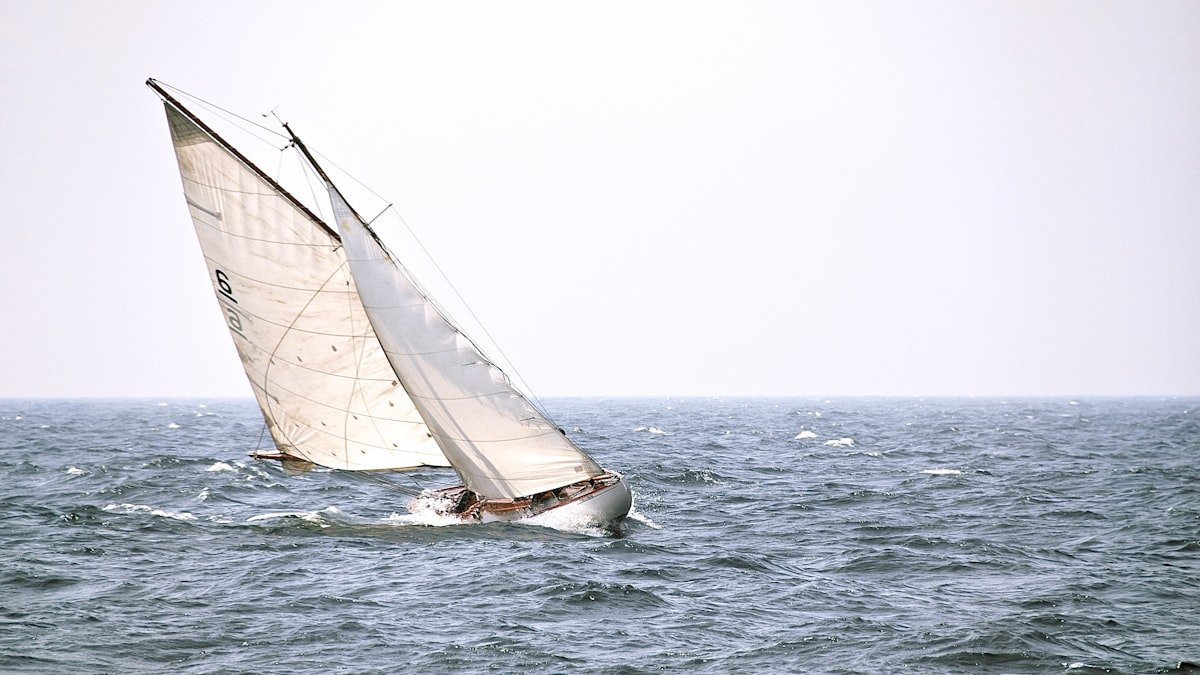
The case for the Beneteau Oceanis 48
Volume that punches above its length
Cruising World described the cockpit as "what you'd have seen on a 65-foot yacht 10 years ago." That is not hyperbole. The 4.74 m beam, carried well aft, creates a cockpit that can seat eight adults for dinner without anyone perching on a coaming. Below, even the 3-cabin version feels uncrowded, because Nauta Design used the chined hull sections to push furniture outboard and open up the centreline walkways.
One owner put it plainly: "We ended up in the 48 primarily because of the amazing master cabin over the 45" (Anonymous owner, SailboatOwners Forums, circa 2013–2014).
Layout flexibility
Six cabin/head combinations from the factory is unusual for a production boat. If you are buying used, it means you can find a boat configured for either private cruising (2/2 owner's version) or charter revenue (4/4 or 5/3). Decide which layout you need before you start searching. Switching from a 4-cabin to a 2-cabin interior after purchase is a costly refit.
Under engine
Sea-trial data showed 8.3 knots at 2,500 rpm. That is respectable hull speed for a 48-footer and useful for keeping schedules in calm Mediterranean summers. Later hulls got the Yanmar 4JH80 (80 hp) on an SD60 saildrive, a well-supported engine with a global parts network.
CE Category A
The Oceanis 48 carries CE Category A certification (offshore, 11 persons). This is not the same as saying it was built for the Southern Ocean, but it means the structural scantlings, stability, and safety equipment meet the European standard for open-ocean passages. If your insurance underwriter asks about certification, you have the right letter.
✓ Strengths
- •Enormous cockpit and saloon volume for a 48-footer
- •Six cabin/head layouts from factory
- •CE Category A offshore certification
- •Strong engine performance (8.3 kt at 2,500 rpm)
- •Yanmar engine with global parts network
- •Wide resale market (~130 listings globally)
✕ Trade-offs
- •Balsa-core deck vulnerable to water ingress at fittings
- •Light-wind sailing performance below class average
- •Early hulls had commissioning QC issues (wiring, cabinetry)
- •Interior creaking offshore (bulkheads, furniture)
- •200 L fuel tank limits range without optional extra tank
Weak points and what they cost
Balsa-core deck: the one you must check
The GRP/balsa sandwich deck is structurally efficient but unforgiving if water finds its way past a deck fitting. Every stanchion base, cleat bolt, and winch fastener is a potential entry point. On a boat that has been chartered hard for eight years, the odds of at least one compromised area are high. Budget €3,000–€8,000 for localised core repair if your surveyor finds soft spots. A full deck re-core on a boat this size can exceed €20,000.
Tap-test every square metre of deck and use a moisture meter during the pre-purchase survey. Do not skip this.
Electronics and commissioning on early hulls
Boats from the 2011–2014 production window have a documented pattern of commissioning faults. Owners on SailboatOwners Forums reported bilge pumps not wired at delivery, mislabelled tank gauges, and factory-fitted Simrad electronics failing repeatedly. If you are looking at an early hull, verify that every electrical system actually works during the sea trial. Replacing a full Simrad suite with modern B&G or Garmin kit costs €5,000–€12,000 depending on MFD count and radar.
Interior cabinetry hardware
Owners across multiple hulls reported cabinet latches failing, hinges fitted with too few screws, and undersized fasteners. These are cosmetic nuisances, not structural problems. A full re-hinging and re-latching of all cabinetry might cost €500–€1,000 in hardware and a weekend of work.
Creaks and groans offshore
Bulkhead and furniture creaking in a seaway is a widespread observation across this Oceanis generation. The bonded-in furniture structure flexes with the hull. Not dangerous, but loud enough to disturb sleep on a rough night passage. Some owners have resolved the worst creaks by adding bonding or padding at contact points.
Light-wind performance
The Berret Racoupeau hull form prioritises stability and volume over light-air speed. On a Cruising World sea trial, the boat made 4–4.5 knots hard on the wind in 5–6 knots of breeze. Manageable, but nothing to celebrate. Many owners add an asymmetric spinnaker (160 m² factory option) or a screecher to stay sailing below Force 3. If light-air performance matters to you, the deep-keel version (2.17 m draft) will point better than the shoal option.
Saildrive maintenance
Later hulls with the Yanmar SD60 saildrive need periodic bellows inspection and replacement. This is standard maintenance for any saildrive boat, but charter operators routinely defer it. On a used ex-charter hull, demand documented service records for the saildrive seal. Bellows replacement costs €800–€1,500 including haul-out.
Beneteau Oceanis 48 vs the obvious alternative
The Oceanis 48 overlaps most directly with the Jeanneau Sun Odyssey 479, its near-identical competitor from the same production era and similar market position. Both are French-built, volume-production 48-footers aimed at the charter-and-coastal-cruising buyer.
| Criteria | Beneteau Oceanis 48 | Jeanneau Sun Odyssey 479 |
|---|---|---|
| LOA | 14.60 m | 14.48 m |
| Beam | 4.74 m | 4.49 m |
| Displacement | 12,594 kg | Similar class |
| Layout options | 6 cabin/head combos | Typically 3 or 4 cabins |
| Draft (deep) | 2.17 m | Similar class |
| Interior design | Nauta Design (Italy) | Jean-Marc Piaton / Philippe Briand |
| Cockpit volume | Notably larger | Standard for class |
| Hull construction | Solid GRP hull, GRP/balsa deck | Similar |
Interior Volume & Layout Flexibility
The Oceanis 48's main advantage is interior volume. That extra beam translates directly into a wider saloon and larger aft cabins, and the six layout options give used buyers a better chance of finding the exact configuration they want. The Jeanneau may have an edge in helm feel and sailing manners. The 479's slightly narrower beam and Briand-designed hull often draws praise for a more connected sailing experience. Both boats share the same category of known problems: production-line QC issues, balsa-core deck risks, and adequate-but-not-exciting light-wind performance.
Pricing on the used market is comparable. If you find a well-maintained Oceanis 48 in the right layout at the right price, there is no compelling reason to hold out for a 479, or vice versa. Buy the boat, not the badge.
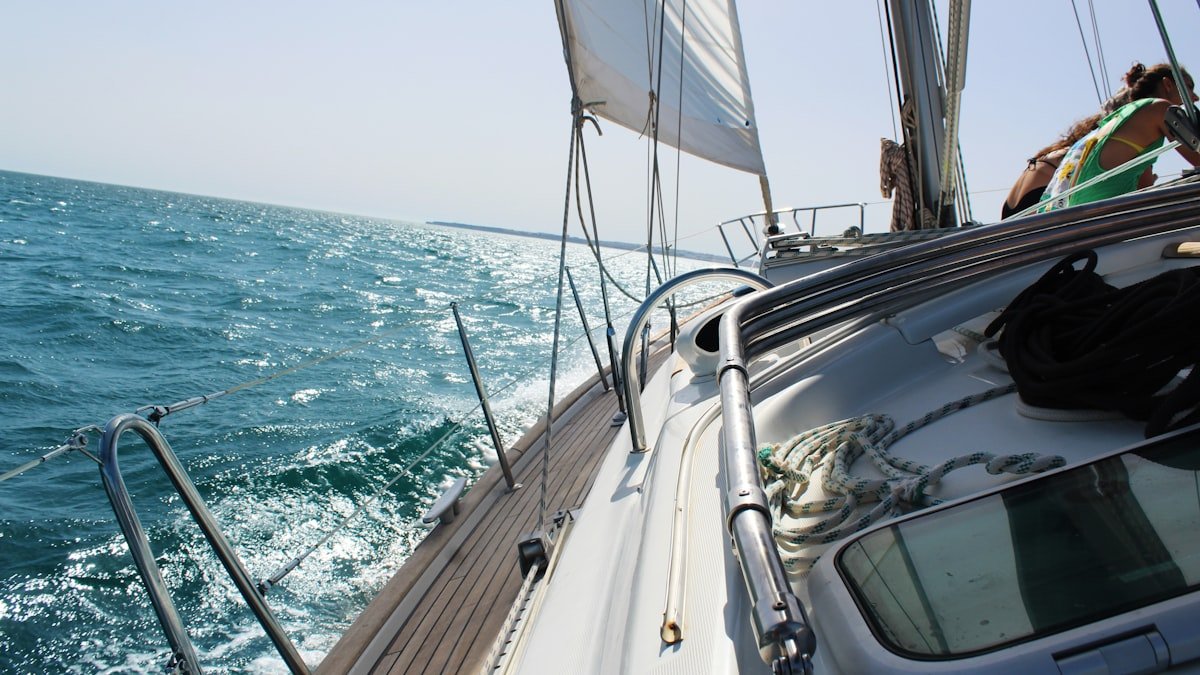
Beneteau Oceanis 48 price: what the market asks
As of August 2026, approximately 130 used Beneteau Oceanis 48s are listed globally across major platforms, with significant overlap between aggregators. Prices range from approximately €155,000 for early (2012–2013) hulls needing work to approximately €365,000 for heavily equipped 2018–2019 boats in turnkey condition.
BT Market Snapshot
checked August 2026
~130 globally across all platforms (37 boats.com; 31 YachtWorld; 33 YachtAll; 18 iNautia; 11 Boatshop24; 10 Boat Trader — significant overlap between platforms). Band of Boats and Annonces du Bateau: listings confirmed present but counts not retrieved. Beneteau Oceanis 48 listed, asking ~155,000 (est. from Boatshop24 low of $129,467 × 0.92 + lower outliers on European platforms)–~365,000 (est. from Boat Trader high $395,000 × 0.92; heavily equipped 2018–2019 hulls), most between ~185,000 and ~265,000.
| Platform | Listings | Asking |
|---|---|---|
| boats.com (incl. YachtWorld network) | 37 used | $100,000–$500,000 (buckets shown); Boat Trader subset: $214,900–$395,000 |
| YachtWorld | 31 | overlaps boats.com |
| YachtAll / iNautia | 33 (YachtAll); 18 (iNautia) | €170,000–€281,000 (iNautia confirmed EUR); individual listings €179,900–€215,000 seen |
| Boat Trader | 10 | $214,900–$395,000; avg $287,250 (~€264,300). Model years 2012–2019. |
| Boatshop24 | 11 | $129,467–$223,575 (~€119,000–€206,000). Model years 2012–2018. |
| Boat24 | unknown — page confirmed live but count and full price range not returned in snippet | One listing visible at €183,000 (2018 hull, Greece, 12.43×4.20 m shown — possibly Oceanis 38/40, dimensions mismatch; treat as partial data only) |
Asking prices, not sale prices. Updated with each revision.
Price brackets
| Bracket | Approx. EUR | What you get |
|---|---|---|
| Bottom quartile (P25) | ~€185,000 | 2012–2014 hulls, often ex-charter, potentially deferred maintenance. Survey critical. |
| Mid-range | €185,000–€265,000 | 2014–2017 hulls, owner versions or low-charter-use boats, reasonable equipment. |
| Top quartile (P75) | ~€265,000+ | 2017–2019 hulls, Yanmar 80 hp, updated electronics, bow thruster, well-maintained. |
A sample listing from Norway (as of August 2026): a 2017 hull in owner's version, ex-charter from Croatia, with Yanmar 80 hp, bow thruster, and B&G electronics, listed at approximately €251,400. That sits slightly below the P75 mark.
The standard fuel tank is only 200 L. If the optional additional 200 L tank was not fitted at build, adding one later costs €2,000–€4,000 and is worth negotiating into the sale price. Also check water capacity: the standard 370 L tank can be supplemented by an optional 320 L tank, and for cruising beyond coastal hops, you want both.
Beneteau does not publish production numbers for the Oceanis 48, so estimating what percentage of total hulls is currently for sale is impossible. The ~130 listing count suggests healthy supply, which keeps prices competitive for buyers.
Who this boat fits and who it doesn't
Good fit
- Coastal cruisers and Med charter owners. The volume, layout flexibility, and CE Category A cert make this a strong choice for anyone splitting time between personal use and charter income in the Adriatic, Aegean, or Balearics.
- Families upgrading from 38–42 ft. If you have been sailing a 40-footer and want more space without the crew complexity of a 55-footer, the Oceanis 48 hits the sweet spot. Twin helms and a well-led rig make short-handed sailing manageable.
- First-time big-boat owners. A forgiving helm, predictable behaviour, and a massive parts-and-service network reduce the learning curve considerably.
Not ideal for
- Committed blue-water sailors. Press and forum consensus describes this generation of Oceanis as well-suited for coastal and charter use but on the light side for serious ocean-bashing. If you plan a circumnavigation, look at heavier-built alternatives or budget for significant upgrades to rigging, ground tackle, and tankage.
- Performance-oriented sailors. A D/L of ~150 and SA/D of ~18 mean this boat sails like a comfortable cruiser, not a racer-cruiser. If you want to win Wednesday-night beer cans, look elsewhere.
- Shallow-water cruisers needing under 1.5 m draft. Even the shoal keel draws 1.83 m. For gunkholing in the Bahamas or along the ICW, that is still too deep for many anchorages.
Verdict
The Beneteau Oceanis 48 does exactly what Beneteau designed it to do: deliver maximum liveable volume, layout flexibility, and ease of handling in a 48-foot hull at a production-boat price. It sails adequately in moderate breeze, motors well, and rewards owners who maintain the deck fittings and service the saildrive on schedule. It does not pretend to be a bluewater thoroughbred or a dinghy in disguise.
Buy it if you value interior space, want charter income potential, and sail primarily in coastal or offshore-coastal conditions. Walk away if you need light-air performance, serious offshore pedigree, or low maintenance costs on a neglected ex-charter hull.
The decision formula is straightforward. Find a post-2015 hull in owner's or 3-cabin layout with the optional fuel tank fitted, get a rigorous survey with full deck moisture mapping, and budget €10,000–€15,000 above purchase price for immediate upgrades covering electronics, rigging inspection, and saildrive service. That gets you a capable, spacious coastal cruiser that holds its value in a market with steady demand.
The Verdict
Choose Beneteau Oceanis 48 if you want maximum interior volume and layout flexibility in a 48-ft production cruiser at €185k–€265k
Best for: Coastal cruisers, Med charter owners, families upgrading from 38–42 ft
Choose Look elsewhere if you need genuine bluewater pedigree, light-air performance, or sub-1.5 m draft
Best for: Circumnavigators, performance sailors, shallow-water cruisers
Method: Assembled from Beneteau North America official spec sheet (June 2017, V10179), Beneteau North America official spec sheet (June 2017, V10179); corroborated by Cruising World, Murray Yacht Sales (citing Trade A Boat review), Murray Yacht Sales (citing Beneteau and Trade A Boat), Trade-a-Boat (Australia), Beneteau North America official spec sheet (June 2017, V10179) — ratio calculated, Sailboat-Cruising.com, Murray Yacht Sales, including owner reports. Data checked 2026-08-26. Listings data reflects asking prices at the time of checking. This dossier of facts is not a substitute for a marine survey.
Beneteau Oceanis 48 price: new, used by year, and what moves it
Beneteau Oceanis 48 Used Market Snapshot (2026)
| Years | Typical price (used) | What to check |
|---|---|---|
| 2018–2019 | €230,000–€280,000 | Final build years; Yanmar 4JH4TE (75 hp) or 4JH80 (80 hp) depending on spec; check electrically operated swim platform actuator, deck balsa-core moisture intrusion around deck fittings, and condition of Sparcraft alloy mast/standing rigging. |
| 2016–2017 | €177,000–€225,000 | Yanmar 4JH80 (80 hp, 59 kW) standard; inspect balsa-core deck sandwich for rot at chainplates and stanchion bases, verify keel bolt torque/condition at hull joint, check German-system running rigging blocks on arch for wear. |
| 2014–2015 | €165,000–€215,000 | Mix of Yanmar 4JH4TE (75 hp) and 4JH80; infujection hull lamination generally sound but inspect inner moulding bonding for delamination noise (hull flex/creaking reported on early examples); check osmosis on waterline, interior teak trim condition. |
| 2012–2013 | €155,000–€220,000 | Launch generation (2012 'Best Production Sailing Yacht' winner); solid polyester hull layup with GRP/balsa injection-moulded deck — balsa core rot around hatches and porthole frames is the most common surveyor finding; early boom height was excessive (corrected mid-production run); verify keel bolt corrosion and hull-keel joint integrity. |
The Oceanis 48 depreciates moderately but holds value better than many production cruisers due to high build volume and charter-fleet demand: a well-kept 2019 example lists at roughly 55–65% of its original ~€223,500 new price, while a 2013 example retains approximately 70–85% of its then-current new price in EUR terms, aided by post-2020 used-boat price inflation. Across listings on iNautia, Yachtall, Boat24, and Boat Trader the entire model range clusters between €155,000 and €280,000, with price compression between year groups suggesting limited depreciation past the first five years.
The Oceanis 48 was a major charter-fleet boat for operators such as The Moorings and Sunsail; ex-charter examples (typically 4–5 cabin layouts, high engine hours, heavy interior wear) commonly list 15–25% below comparable private-owner boats of the same year. Buyers should budget for sail replacement, winch service, full engine-hour audit, and thorough interior inspection, as charter-configured boats were specified for reliability but used intensively in warm-water destinations.
How these prices compare across sizes and types → · Could this boat pay for itself in charter? → · What to check on a used Beneteau Oceanis 48 →
Looking for a Beneteau Oceanis 48?
We know this market and where the good ones are — new or used, wherever she happens to be. Tell us what you're after and we'll find you the best option.
Sources
- SailboatOwners Forums — thread 'Oceanis 48 Insights?'· forum
- Trade-a-Boat (Australia, press review)· yard
- SailboatOwners Forums· forum
- SailboatOwners Forums· forum
- SailNet Community· forum
- Wikipedia / Yachting Monthly citation therein· yard
- Finn.no listing (equipment description)· data
- Cruising World· test
- Murray Yacht Sales (citing Beneteau and Trade A Boat)· yard
FAQ
How much does a used Beneteau Oceanis 48 cost?
As of August 2026, used Beneteau Oceanis 48 prices range from approximately €155,000 for early 2012–2013 hulls to approximately €365,000 for well-equipped 2018–2019 models. The lower quartile sits around €185,000 and the upper quartile around €265,000. These are analyst approximations from platform listing data.
What are the main problems with the Beneteau Oceanis 48?
The most significant known issue is the GRP/balsa sandwich deck being susceptible to water ingress through unsealed deck fittings. Other reported problems include factory electronics reliability issues on early (2011–2014) hulls, undersized cabinetry hardware, bulkhead creaking offshore, and below-average light-wind sailing performance. Saildrive bellows maintenance is critical on later hulls.
Is the Beneteau Oceanis 48 suitable for ocean crossings?
The Oceanis 48 holds CE Category A certification (offshore, 11 persons), meaning it meets the European structural and stability standard for open-ocean passages. However, press and forum consensus describes this Oceanis generation as well-suited for coastal and charter use but on the light side for serious sustained ocean work. Owners planning blue-water passages typically budget for upgrades to rigging, ground tackle, and tankage.
How many cabin layouts does the Oceanis 48 offer?
The Oceanis 48 was available in six cabin/head configurations: 2/2, 3/2, 3/3, 4/3, 4/4, and 5/3. The 2- and 3-cabin versions feature an owner's suite forward with a centrelined double berth, enclosed head, and Italian-style shower. The 4-cabin version has twin staterooms fore and aft.
What engine does the Beneteau Oceanis 48 have?
Earlier hulls were fitted with a Yanmar 75 hp diesel. Later hulls (from around 2017) received the Yanmar 4JH80 at 80 hp on an SD60 saildrive. Sea-trial data showed 8.3 knots at 2,500 rpm under engine. The standard fuel tank holds 200 L, with an optional additional 200 L tank available.


