Dufour 430 Review: Forty-Three Feet of Borrowed Bowsprit (2026)
The Dufour 430 is a beamy, Felci-designed 43-footer (LOA 13.24 m) built from 2019 with at least 282 hulls produced. CE Category A rated, it carries a displacement/length ratio of 169 and a low 27% ballast ratio. Used prices range from €149,000 to €290,000 as of August 2026. Known issues include falling headliner panels, weak steering columns, and poor passive ventilation.

13.24 m
LOA
Length Overall
9,700 kg
half-load
Displacement
169
D/L Ratio
€149k–€290k
Used Price Range
What the Dufour 430 actually is
The Dufour 430 Grand Large was designed by Umberto Felci and launched at the 2018 Cannes Yachting Festival. It was the first hull in Dufour's Generation 3 Grand Large series. At 13.24 m LOA with a beam of 4.30 m, it has a length-to-beam ratio of 2.91. That beam is carried unusually far forward, making it wide by any standard.
Hull length without the integrated bowsprit is 12.50 m. As one Sailing Anarchy forum member put it in May 2020: "Hull length = 12.5m (41' the lying bastards. 43 if you count the bowsprit)." The bowsprit is functional, not cosmetic. It is the tack point for the asymmetric spinnaker, but know what you are actually buying in terms of hull.
Construction is GRP hand-laid fibreglass for the hull (single skin) with an injection-moulded deck sandwich. The standard keel is an L-shaped bulb fin drawing 2.10 m. A shoal option at 1.75 m exists for thin-water cruising grounds. A single deep spade rudder handles steering. Power comes from a Volvo Penta D2-50 saildrive (50 hp) as standard, with an optional D2-60 (60 hp) confirmed on later production boats.
Dufour offered four layout configurations: a 3-cabin/2-head standard, a 4-cabin version with bunks, an owner-suite variant with two aft cabins, and a so-called Adventure version with a forward galley. Water capacity ranges from 380 to 470 litres depending on configuration, and fuel capacity sits between 200 and 250 litres. CE Category A rates the boat for ocean passages with a maximum of 10 persons aboard, though practical sleeping berths number 8.
Production ran from 2019 to at least 2024, with build number 282 confirmed on a 2024 model-year boat. Dufour never published a total production count, but at least 282 hulls were built as of August 2026. The model is likely discontinued. itBoat states it was replaced after 2025, though no official Dufour end-of-production announcement has surfaced. If you want to understand how the 430 fits into the broader Dufour range and the brand's interior approach, the Dufour Yachts: The Interior Design Champion guide covers the design philosophy in detail.
Sailing performance
The numbers
At 9,700 kg half-load displacement, the 430 sits firmly in light-displacement territory. Her displacement/length ratio of 169 places her in the "light racer" category by standard classification scales. The sail-area/displacement ratio is 17.7 with the ISO reference sail plan and climbs to 20.6 with a 135% genoa. Solid numbers for a cruiser of this size.
The rig is a 9/10ths fractional sloop with swept-back spreaders and a furling genoa as standard. Total upwind sail area with the working genoa runs around 92 m² (approximately 990 sq ft by one source, 893 sq ft by another depending on which sail is measured). Mainsail area is 46.8 m², genoa 38.7 m².
What that means on the water
In Force 3 to Force 4 conditions (7–16 knots of true wind), the 430 rewards those low displacement numbers with boat speeds that will embarrass older, heavier 43-footers. The wide hull generates form stability. The boat feels planted in moderate conditions and resists initial heel well. Reaching with a Code 0 or asymmetric off the bowsprit is where the design comes alive.
Physics does not allow free lunches, though. The ballast ratio is just 27%, with 2,600 kg of lead in a 9,700 kg boat. That places it higher than only 4% of comparable sailboat designs per YachtDatabase's statistical comparison. The capsize screening factor is 2.03, technically above the 2.0 threshold used for offshore racing eligibility. Neither figure disqualifies the boat from offshore work. The CE Category A rating confirms that. Both figures do tell you this is a hull optimised for moderate conditions and coastal cruising, not for heavy-weather endurance passages.
In a Force 6 (22–27 knots), the wide beam and light ballast mean the crew needs to reef early and manage heel actively. This is a fast cruiser, not a sea-kindly heavy-weather boat.
What owners praise
Volume is the first thing every owner mentions. The 4.30 m beam creates an interior that feels a class above at the dock, with wide settees and a genuine double berth in the owner's cabin. One Band of Boats reviewer summed up the sailing experience simply: "Très marin et solide!" (Anonymous used-boat buyer, Band of Boats, 2025).
The cockpit is well arranged for shorthanded sailing. Winches are within arm's reach of the helm, and the twin-wheel layout leaves a clear walkthrough to the transom platform. The standard mainsheet traveller sits on the coachroof, keeping the cockpit sole clear for social sailing or charter use.
Below decks, the 3-cabin layout gives each cabin a usable double berth with reasonable headroom. The two heads are properly separated, one ensuite to the forward owner's cabin, one shared between the aft cabins. Water tankage of 380–470 litres, depending on configuration, is adequate for a week of coastal cruising without shore water.
Light-air performance genuinely impresses. Low displacement and generous sail area mean the 430 keeps moving in conditions that park heavier boats. Weekend sailors in light-wind areas like the Mediterranean in summer will appreciate this more than most.
✓ Strengths
- •Spacious interior from 4.30 m beam
- •Strong light-air performance (D/L 169, SA/D 17.7–20.6)
- •CE Category A ocean rating
- •Four layout options including owner-suite and adventure versions
- •Practical twin-wheel cockpit layout
✕ Trade-offs
- •Low ballast ratio (27%) limits heavy-weather confidence
- •Falling headliner panels reported
- •Steering column weakness flagged by owners
- •No passive ventilation (dorades) standard
- •Forward galley offers poor bracing when heeled
Weak points and what they cost
Headliner panels falling
A French owner writing on Band of Boats explicitly warned buyers to verify that falling ceiling panels have been fixed before purchase. This is a known factory-fit issue where the adhesive or clips securing the interior panels fail over time. On a used-boat survey, pull gently on every panel edge. Refitting panels with proper marine adhesive and backing plates is a half-day job per panel for a boatyard, but if neglected, panels drop onto berths and electronics.
Steering column weakness
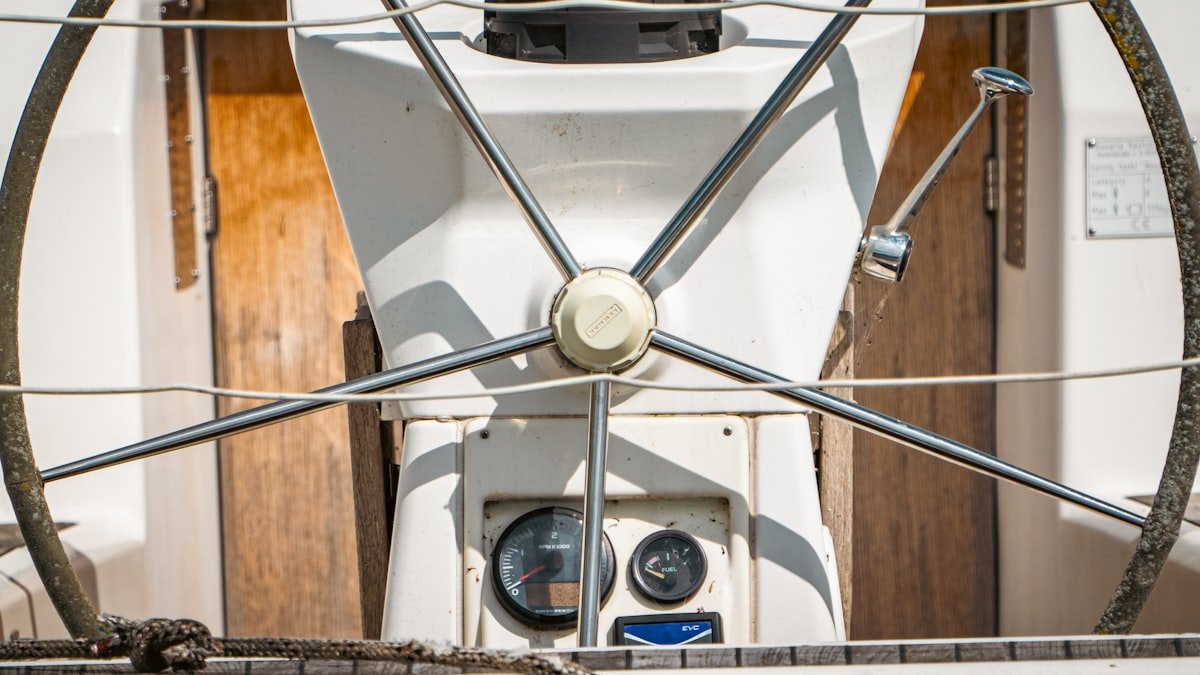
The same Band of Boats buyer flagged the helm and steering columns as "too weak" and advised confirming repair before buying. On a survey, load-test both wheels and inspect the pedestal base for cracking or play. A pedestal rebuild or replacement requires a specialist, and sourcing Dufour-specific parts may involve lead times.
Lack of interior handholds
"The wide open spaces and lack of handholds is an issue" (Anonymous forum member, Sailing Anarchy Forums, May 2020). The open saloon that creates such impressive volume at the dock becomes a liability at sea. Retrofitting grab rails is straightforward in a GRP boat, with stainless rails through-bolted with backing plates, but placement needs careful planning to avoid wiring and plumbing runs behind the liner.
No passive ventilation
No dorade vents are fitted as standard. As one Sailing Anarchy user wrote: "I hope it has some options for passive ventilation" (Sailing Anarchy Forums, May 2020). Without dorades, closing hatches in rain or spray means moisture builds up rapidly below. Retrofitting a pair of dorade boxes on the coachroof is a proven solution. Budget approximately €800–€1,500 for parts and installation, plus the cost of cutting deck apertures.
Forward galley bracing
The athwartships forward galley, standard on some layouts, lacks a U-shape or island configuration. That leaves the cook unsupported on starboard tack when heeled. This is a design choice inherent to the Felci-era Dufour layout. A retrofit sea rail or lee cloth is possible but does not fully solve the ergonomic problem. If you plan to cook underway regularly, the aft-galley layout options may suit better.
Saildrive seal maintenance
The Volvo Penta saildrive requires its rubber hull diaphragm replaced every 7 years per manufacturer specification, or approximately 500 operating hours, whichever comes first. This is a dealer-only procedure, and insurance companies may require documented compliance. The earliest 2019 boats are now approaching or past that interval. Budget for this when surveying any boat older than 5 years.
Ex-charter condition
A significant proportion of used 430s on the market were placed in charter fleets. Assume accelerated wear on deck hardware, upholstery, and running rigging on any ex-charter boat. A rigorous survey and a budget for re-rigging and cushion replacement are essential.
Dufour 430 price: what the market asks
As of August 2026, approximately 40–45 used Dufour 430s are listed worldwide across major platforms, with 55–65 total listings including duplicates and a handful of new or dealer-stocked units. Prices for used boats range from €149,000 to €290,000, with the lower quartile sitting around €175,000 and the upper quartile at roughly €255,000.
| Price bracket | What you get |
|---|---|
| €149,000–€175,000 | 2019–2020 ex-charter boats, high engine hours, worn soft furnishings. Expect to spend €15,000–€25,000 on refitting. |
| €175,000–€255,000 | 2020–2022 private or late-charter boats in reasonable condition. Most of the market sits here. |
| €255,000–€290,000 | 2022–2023 low-hour private boats, often with electronics and sail upgrades. Best value if survey is clean. |
One outlier worth noting: a new/unsold 2024 dealer unit (build #282) is listed at NOK 3,912,000 ex tax, approximately €338,000. That is not representative of the used market. A US-listed boat at approximately €321,000 also appears over-priced relative to European equivalents.
BT Market Snapshot
checked August 2026
~55–65 worldwide across all platforms (deduplication not possible); ~40–45 used. BoatTrader now shows 28 listings (up from estimated 21 on boats.com which now shows 17). YachtWorld stable at 11. Dufour 430 listed, asking 149,000–290,000, most between ~175,000 and ~255,000.
| Platform | Listings | Asking |
|---|---|---|
| YachtWorld | 11 | Individual used prices not returned by search; one confirmed new/near-new dealer listing at NOK 3,912,000 ex tax (≈€338k, 2024 build #282) |
| iNautia / Annonces du Bateau | 12 (iNautia) / 11 (Annonces du Bateau) — shared inventory | €149,000–€290,000 |
| boats.com | 17 (down from 21 at pass-1; 2 new, 15 used as of 2026-08-19) | $100,000–$500,000 USD bracket |
| BoatTrader | 28 (newly confirmed at pass-2) | not returned individually by search |
| Boatshop24 | 7 (1 new, 6 used) | £138,674–£238,346 (≈€164k–€282k) |
| Band of Boats | ~4 active (2019–2021 vintages visible) | €149,000–€290,000 (per cross-listed yachtall.com data) |
Asking prices, not sale prices. Updated with each revision.
Where to look
iNautia and its partner Annonces du Bateau carry the densest European inventory, with 12 listings in the €149,000–€290,000 range. BoatTrader shows 28 listings, many overlapping with boats.com's 17. YachtWorld lists 11. Boatshop24 shows 7 units with GBP pricing that converts to approximately €164,000–€282,000. Band of Boats and yachtall.com carry additional listings, typically in the same €149,000–€290,000 range.
Who this boat fits and who it doesn't
Buy a 430 if you are:
- A coastal cruising couple or family wanting volume and performance in the low-40s size range
- A Mediterranean or Caribbean seasonal sailor who values light-air speed
- Buying a boat that will also earn charter income, as the 3- and 4-cabin layouts are charter-proven
- Comfortable with proactive maintenance of known weak points, including headliners, ventilation, and steering
Look elsewhere if you are:
- Planning extended offshore passages in high latitudes, where the 27% ballast ratio and 2.03 capsize screening factor suggest a boat built for moderate conditions, not sustained heavy weather
- A cook who wants to prepare meals underway, as the forward galley layout offers poor bracing on starboard tack
- A liveaboard who needs reliable passive ventilation in the tropics without retrofitting dorades
- Looking for a boat under 2.00 m draught without the performance compromise of the shoal keel, since the standard keel draws 2.10 m and the shoal option at 1.75 m reduces pointing ability
Verdict
The Dufour 430 is a competent, fast, spacious cruiser that does 80% of what most sailors actually do extremely well: coastal hops, weekends, two-week summer passages. The Felci hull genuinely moves in light air, and the interior volume from that 4.30 m beam is hard to match from any competitor at this price point.
The 20% it does not handle well is heavy-weather offshore sailing and cooking underway. Those are not hidden flaws. They are design choices baked into the wide, light hull and the open interior layout. If your sailing life is anchored in the Med, the Caribbean, or coastal northern Europe with sensible weather windows, the 430 is a strong buy between €175,000 and €255,000, the sweet spot where you avoid the worst ex-charter wear without paying near-new prices for a discontinued model.
Survey hard. Check headliner panels, steering columns, saildrive seal records, and standing rigging age. Budget €5,000 for ventilation and grab-rail retrofits if the previous owner has not already done them. With those boxes ticked, the 430 delivers a lot of boat for the money.
The Verdict
Choose Buy the Dufour 430 if you want volume, speed, and a proven coastal cruiser under €255,000
Best for: Med/Caribbean coastal sailors, charter-income buyers, couples wanting space
Choose Skip the Dufour 430 if you plan sustained offshore passages in heavy weather or need a sea-kindly galley
Best for: Bluewater passage-makers, liveaboards in the tropics
Dufour 430 price: new, used by year, and what moves it
Dufour 430 Used Market Snapshot (2026)
| Years | Typical price (used) | What to check |
|---|---|---|
| 2023–2024 | €250,000–€425,000 | Wide spread reflects lightly used private boats at the top vs. ex-charter units at the bottom; 2023 YachtWorld IT listings showed €250,000–€425,000. Standard engine Volvo Penta 50 hp saildrive; 60 hp option was available from 2022 onward. Self-tacking jib option increasingly common on late builds. Verify saildrive bellows condition and hours on engine. |
| 2022 | €310,000–€390,000 | RightBoat showed a 2022 Grand Large at ~$382,000 (~€351,000). Advantage Yacht Sales listed a 2022 at $359,000 (~€330,000). Check saildrive seal integrity and Volvo Penta sail drive mating flange for corrosion; injection-moulded deck sandwich can develop soft spots around chainplate and stanchion bases if deck sealant not maintained. |
| 2021 | €260,000–€360,000 | RightBoat 2023 GL (Le Marin) at ~$338,000 (~€311,000) illustrates typical well-equipped 2021-era pricing. Many 2021 hulls entered charter fleets (Greece, Croatia, Caribbean); inspect upholstery, winch wear, and engine hours carefully. Standard draft 2.10 m; shoal-draft option (1.75 m) exists but reduces upwind performance. |
| 2020 | €220,000–€290,000 | YachtWorld IT listed a 2020 Barcelona boat at €265,000. Early post-Fountaine-Pajot-acquisition build year (FP acquired Dufour in 2018); hull construction unchanged but interior fit-out tolerances tightened in later runs. Check forward galley cabinet joinery and companionway hatch seal, reported weak points on early hulls. |
| 2019 | €160,000–€230,000 | RightBoat showed a 2019 (Pula, Croatia) at ~$174,000 (~€160,000); Boatshop24 bottom of range at ~$138,674 (~€127,000 for apparent charter units). First production year; Felci-designed hull introduced at Cannes 2018, delivered from 2019. Verify keel-bolt torque and inspect keel-to-hull joint for staining or movement — standard pre-purchase survey item on all early runs. |
The Dufour 430 depreciates moderately but not steeply for a production cruiser: a lightly used 2022 private boat retains roughly 75–85% of its original ~€275,000–€310,000 list price (options-dependent), while a 2019 first-year example has settled to approximately 55–65% of new list. The model's single-generation run (2019–2025) without a mid-cycle facelift means there is no 'pre-update discount' dynamic, so depreciation tracks hull age and condition linearly rather than in steps.
The Dufour 430 is a mainstream charter-fleet boat operated widely by Dream Yacht Charter, Sunsail/TUI, and regional operators in Greece, Croatia, and the Caribbean; ex-charter examples (typically 3–5 seasons old) appear in listings at a 20–35% discount versus comparable private boats of the same year, reflecting higher engine hours, accelerated upholstery wear, and potentially deferred maintenance on standing rigging and through-hulls. A pre-purchase survey and engine-hour verification are essential, as charter operators often run the Volvo Penta 50 hp to high hours before selling.
How these prices compare across sizes and types → · Could this boat pay for itself in charter? → · What to check on a used Dufour 430 →
Looking for a Dufour 430?
We know this market and where the good ones are — new or used, wherever she happens to be. Tell us what you're after and we'll find you the best option.
Sources
FAQ
How many Dufour 430s were built?
Dufour never published total production numbers. The confirmed lower bound is at least 282 hulls, based on a 2024 model-year boat carrying build number 282 (as of August 2026). Production ran from 2019 to at least 2024.
What is the typical price of a used Dufour 430?
As of August 2026, used Dufour 430s are listed between €149,000 and €290,000. The lower quartile sits around €175,000 (early ex-charter boats) and the upper quartile at approximately €255,000 (low-hour private boats from 2022–2023).
What are the common problems with the Dufour 430?
Known issues include falling headliner/ceiling panels, steering columns flagged as too weak by owners, lack of standard passive ventilation (no dorades), poor cook bracing in the forward galley layout when heeled, and the saildrive seal requiring replacement every 7 years. Ex-charter boats show accelerated wear on deck hardware and upholstery.
Is the Dufour 430 a good bluewater boat?
It carries a CE Category A (ocean) rating, so it is structurally approved for offshore. However, its ballast ratio of 27% is lower than 96% of comparable designs, and its capsize screening factor of 2.03 is above the 2.0 offshore racing threshold. It is designed primarily as a fast coastal cruiser, not a heavy-weather passage-maker.
What engine does the Dufour 430 have?
The standard engine is a Volvo Penta D2-50 (50 hp diesel) with saildrive. An optional Volvo Penta D2-60 (60 hp) was fitted on some later production boats, confirmed on at least one 2024 model. The saildrive requires its hull seal replaced every 7 years per manufacturer recommendation.


