Beneteau First 45 Review: Three Keels, Three Different Boats (2026)
The Beneteau First 45 (2008–2015), designed by Philippe Briand, is a 14.07 m racer/cruiser with an SA/D ratio of 19.6, three keel variants (2.0–2.75 m draft), and a 54 hp Yanmar saildrive. Used prices range from €160,430 to €243,359 as of August 2026. Key issues include balsa deck core rot, boom failures offshore, and keel bolt leaks.

14.07 m
LOA
Length Overall
19.6
SA/D Ratio
3
keel options
Draft Variants
€160k–€243k
Market Range (Aug 2026)
What the Beneteau First 45 actually is
The Beneteau First 45 is a Philippe Briand-designed racer/cruiser built between 2008 and 2015. She sits in the middle of Beneteau's First performance line, mirroring the larger First 50 from the same design studio while slotting above the race-biased First 34.7. At 14.07 m (46'2") LOA with a beam of 4.19 m and a waterline length of 11.76 m, the hull delivers a displacement-to-length ratio (D/L) of 182. That puts her in moderate territory: comfortable enough offshore, light enough to plane downwind when the breeze fills in.
One point that trips up buyers: two entirely different boats share the "First 45" name. The model covered here is the Briand design, introduced in 2007 and built from 2008 to 2015. An older Bruce Farr design, the "First 45F5," dates to the 1990s. Listings on secondary platforms often mix the two. Always verify the designer and build year. For broader context on how this model fits Beneteau's range, see our Beneteau: The Complete Brand Guide for Charter & Buying.
Three keels, three boats
The First 45 was offered with three fin-keel configurations, and the differences matter more than draft alone:
| Keel | Draft | Material | Ballast | Best for |
|---|---|---|---|---|
| Shoal | ~2.0 m (6'7") | Cast-iron torpedo bulb | ~4,480 kg | Shallow cruising grounds, Med marinas |
| Standard | 2.39 m (7'10") | Cast-iron bulb fin | 3,875 kg | All-round cruising/club racing |
| Deep / Performance | 2.74–2.75 m (9'0") | Lead whale-tail | 3,875 kg | Offshore racing, IRC |
The standard and deep keels share the same ballast mass of 3,875 kg but use different materials. Only the deep keel is lead. The shoal version compensates for its reduced draft with an extra 605 kg of cast iron. All three pair with a spade rudder.
Rig and sail plan
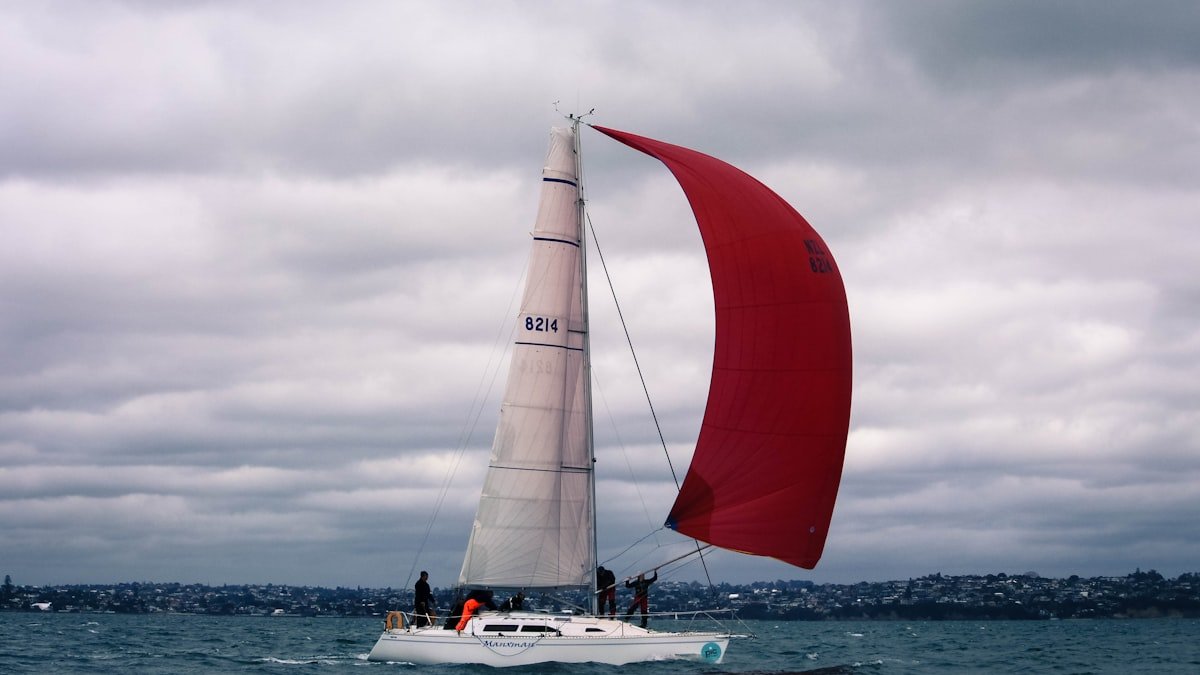
The fractional sloop rig carries triple-spreader aluminium spars in two mast heights: 17.5 m standard and 18.35 m for the regatta version. A carbon two-spreader mast was an optional extra, as was rod rigging for the race-focused build. Total sail area at 100% is 93.1 m² (1,002 sq ft), yielding a sail-area-to-displacement ratio (SA/D) of 19.6. That is firmly in fast territory. Add a spinnaker and you are looking at roughly 120 m² of downwind canvas.
That is a lot of sail for two people to handle. The boat is physically demanding shorthanded unless you fit electric winches.
Layout and living aboard
The standard layout has three cabins sleeping six: a forward owner's cabin with en-suite head, and two aft doubles. An L-shaped galley sits to port, with an outboard navigation station to starboard. Charter configurations sometimes convert the saloon settees to reach eight berths, but the owner layout is three cabins, six berths.
Water capacity is 530 litres (140 US gal) and fuel capacity is 200 litres (53 US gal), fed to a 54 hp Yanmar on a saildrive. The water tank is generous for a boat of this size. The fuel tank is not, which reflects the assumption that you will sail most passages rather than motor them.
Interior character
Briand's interior uses non-standard fittings and a minimalist aesthetic. It looks good when new. The problem is that replacement parts and refurbishment are harder to source and more expensive than on conventional Beneteau production boats. If the joinery needs attention, budget for it before you sign.
Where she earns her keep
The First 45 made its name racing. On introduction, the design took two division wins at Hamilton Island Race Week, and owners report strong IRC results in European offshore events. As one anonymous poster on Sailing Anarchy put it: "The First 45 is a great boat and performs exceedingly well under IRC" (Sailing Anarchy Forums, 28 May 2009).
With a ballast-to-displacement ratio of 0.38 and a 19.6 SA/D, the boat is stiff and fast in Force 3–5 (7–21 knots) conditions. The triple-spreader rig keeps headstay tension high for pointing ability, and the hull shape lets her accelerate out of tacks more quickly than heavier cruisers of similar length.
She also works as a fast passage-maker for couples or small crews willing to invest in a good autopilot and electric winch upgrade. Air draft is 20.75 m (68'1"), which rules out some canal passages but is typical for this size of performance sloop.
✓ Strengths
- •High SA/D (19.6) — genuinely fast in moderate breeze
- •Three keel options suit different sailing grounds
- •530 L water capacity for extended cruising
- •Proven IRC race pedigree
✕ Trade-offs
- •Large sail plan demanding shorthanded
- •Balsa-cored deck prone to moisture ingress
- •Reported boom failures offshore
- •Non-standard interior fittings raise refit costs
Weak points and what they cost
Before the list of problems: the First 45 has a loyal following for good reason. It sails fast, points well, and offers genuine offshore capability from a production hull. The issues below are real and documented, but they are not universal. Most can be caught with a thorough pre-purchase survey.
Balsa deck core rot
The deck is a balsa sandwich with thermo-plastic Tecrothène 109 skins. Moisture ingress through hardware penetrations, chainplates, hatches, and stanchion bases can rot the balsa core. Tap-test every square metre. A localised repair might cost €2,000–€5,000. A full deck re-core is a project measured in five figures and months.
Boom failures
Multiple forum posters reported boom breakages on First 45s offshore. Beneteau offered no official explanation. As one poster noted: "We cooled on the 45 after a couple of boats broke booms offshore" (Sailing Anarchy Forums, 28 May 2009). If the boom is original, inspect the gooseneck area and the vang attachment point carefully. A replacement boom for a 45-footer is a significant expense.
Keel bolt leaks and joint gaps
This is common across the Beneteau First range. Keel bolt nuts are covered with a resin slurry, which makes visual inspection and torque checking difficult. On the deep lead performance keel in particular, a grounding event can create serious keel-to-hull joint problems. After any grounding, the keel area must be professionally inspected. Budget for ultrasonic testing if there is any history of contact.
Chainplate leaks and corrosion
Chainplate weeping is reported. In a performance rig carrying rod rigging and high loadings, corroded chainplates are not just an annoyance. They are a safety risk. Replace or re-bed them on purchase if there is any doubt.
Electrical system
French-production wiring of this era can be undersized for the loads owners add over time. Beneteau US factory tech support has been replaced by dealer networks, which makes diagnosis slower. A complete rewire is a common upgrade on boats that are now 15 or more years old.
How it ages
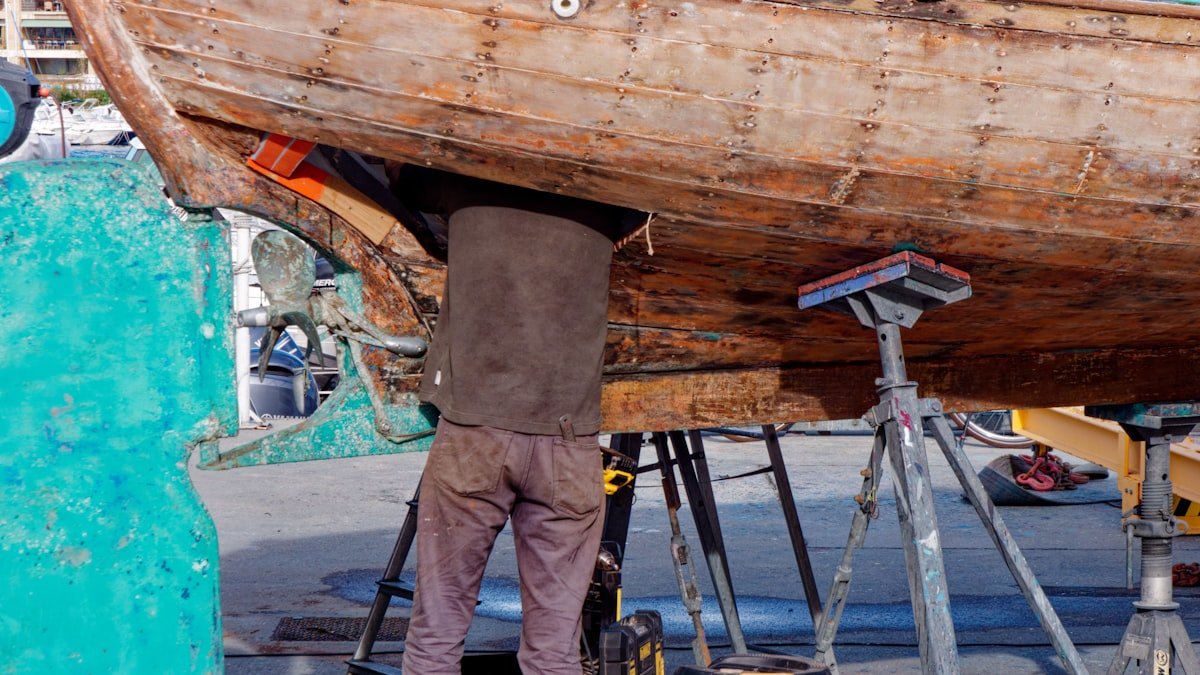
The single-skin fibreglass polyester hull is robust with no core to rot. That is the good news. The deck, chainplates, and keel attachment are where age shows first, and all three require proactive maintenance rather than reactive repair.
Boats from 2008–2010 are now 16–18 years old. At this age, expect to address:
- Standing rigging replacement (rod rigging, if fitted, is expensive but long-lasting if inspected)
- Saildrive seal and anode replacement
- Seacock servicing or replacement
- Electronics upgrades: most original Raymarine or B&G kit will be obsolete
- Interior cosmetics: the Briand fittings age well aesthetically but are expensive to replace if damaged
The Yanmar 54 hp engine is a reliable unit with strong parts support. It ages well if serviced on schedule.
Beneteau First 45 price: what the market asks
As of August 2026, roughly 17 Beneteau First 45 (Briand) listings are active across major platforms. Be cautious: several sites mix this model with the older First 45F5 (Farr design, 1990s), which sells for far less.
BT Market Snapshot
checked August 2026
~17 across checked platforms (5 boats.com, 2 YachtWorld, 4 Annonces du Bateau, 2 iNautia, 4 Boatshop24 [caution: Boatshop24 range 1991–2011 may mix F5 and Briand models]; Boat24 shows 10 but includes older First 45F5 models; Band of Boats listing count unconfirmed) Beneteau First 45 listed, asking 160,430–243,359, most between ~172,000 and ~239,500.
| Platform | Listings | Asking |
|---|---|---|
| YachtWorld | 2 | US$187,382–US$264,521 (≈€172,000–€243,000) |
| boats.com | 5 used (confirmed) | Spans $50k–$500k price buckets; no individual per-listing prices visible in search result |
| Annonces du Bateau | 4 | €160,430–€229,000 (build years 2008–2011) |
| iNautia | 2 | €210,000–€239,500 (build year 2010) |
| Boatshop24 | 4 (caution: year range 1991–2011 listed; likely mixes Briand First 45 with older First 45F5) | US$58,541–US$197,147 (mix of models; lower prices likely F5 variants) |
Asking prices, not sale prices. Updated with each revision.
| Platform | Listings | Price Range | Notes |
|---|---|---|---|
| YachtWorld | 2 | ≈€172,000–€243,000 | Converted from USD |
| Annonces du Bateau | 4 | €160,430–€229,000 | Build years 2008–2011 |
| iNautia | 2 | €210,000–€239,500 | Build year 2010 |
| boats.com | 5 | Not individually listed | Multiple price buckets |
| Boatshop24 | 4 | Mixed — likely includes F5 models | Year range 1991–2011 listed |
The confirmed price floor for a genuine Briand First 45 is €160,430 as of August 2026. The ceiling sits at approximately €243,359. The 25th percentile is roughly €172,000 and the 75th is around €239,500, but these estimates rest on only six to eight firm EUR prices. Treat them as directional rather than definitive.
Beneteau does not publish production numbers for this model, which makes it hard to gauge true scarcity. Listings are thin, roughly 17 confirmed across platforms, and turnover is slow. If you find one well-configured in your price range, move quickly.
Who this boat fits / doesn't
Good fit
- Experienced racing couples or small crews who want IRC-competitive speed from a boat they can also cruise on between events
- Passage-makers who prioritise speed over volume: the SA/D of 19.6 makes for quicker passages than typical cruisers of this length
- Hands-on owners comfortable with proactive maintenance of deck core, keel bolts, and chainplates
Poor fit
- Shorthanded sailors unwilling to invest in electric winches: the 93+ m² sail plan is simply too much for one person to manage on manual primaries
- Buyers seeking a low-maintenance cruiser: the known issues list is longer and more structural than on comparable Oceanis-range boats
- Families wanting maximum interior volume: three cabins and six berths is modest for a 46-footer, and the performance-oriented layout trades living space for cockpit and sail-handling space
Verdict
The Beneteau First 45 delivers a rare combination in the production boat world: genuine race performance with enough creature comforts for extended cruising. The Briand hull is fast, the three-keel lineup covers everything from shallow coastal work to full-on offshore racing, and the 530-litre water tank means you do not need to chase a marina every three days.
The price of that performance is vigilance. Balsa deck core, boom integrity, keel bolt condition, and chainplate health all demand annual attention and honest assessment. A pre-purchase survey on this boat is not optional. It is the most important €2,000 you will spend.
At €160,000–€243,000, the First 45 competes with newer but slower cruisers. If speed genuinely matters, not just as a nice-to-have, and you are prepared to maintain a performance boat as a performance boat, the First 45 rewards that commitment. If what you really want is comfortable cruising with occasional club racing, look at something from the Oceanis range instead.
The Verdict
Choose Buy the First 45 if you want IRC-competitive speed and will maintain deck core, keel bolts, and rig proactively
Best for: Experienced racing sailors who also cruise
Choose Look elsewhere if you want low-maintenance cruising or sail shorthanded without electric winches
Best for: Families, comfort-first cruisers
Method: Assembled from Beneteau Official, Cruising World, TradeABoat, TradeABoat / SailboatData, Cruising World / Beneteau Official, TradeABoat (confirmed); Cruising World (8,543 lb figure), itBoat / GlobeSailor, SamBoat (6 sleeping); GlobeSailor (8 berths in charter config), including owner reports. Data checked 2026-08-26. Listings data reflects asking prices at the time of checking. This dossier of facts is not a substitute for a marine survey.
Beneteau First 45 price: new, used by year, and what moves it
Beneteau First 45 Used Market Snapshot (2026)
| Years | Typical price (used) | What to check |
|---|---|---|
| 2010–2013 | €155,000–€230,000 | Last build years of the Briand/Farr Yacht Design generation (Yanmar 4JH4ACE 54 hp standard engine); three keel options — 2.0m cast-iron shoal bulb, 2.4m cast-iron bulb, 2.75m deep lead whale-tail — and two aluminium mast heights (17.5m / 18.35m) plus optional carbon two-spreader rig; check keel-bolt torque, deck hardware sealant fatigue around chainplates and stanchions, and balsa-core deck moisture at hardware penetrations on race-used examples. |
| 2007–2009 | €140,000–€195,000 | Launch generation of the Briand/Farr design (introduced 2007, Cruising World review 2009); hull is solid infused GRP, deck is fiberglass-balsa sandwich with solid glass at hardware areas; engine control panel placement behind starboard wheel pedestal noted as ergonomic weakness; verify Yanmar 4JH hours, rod forestay condition, and standing rigging age on boats used in racing fleets. |
| 1990–1993 | €60,000–€110,000 | First 45F5 generation, designed by Bruce Farr with Pininfarina interior; Perkins Sabre 50 hp (37 kW) diesel standard; check for osmotic blistering (polyester hull of this era susceptible), Perkins engine hours and injector condition, and keel-to-hull joint hairline cracking ('Beneteau smile') that may indicate keel-bolt loosening. |
| 1988–1990 | €85,000–€125,000 | Transitional era between Frers original and F5 hull; Perkins Sabre Prima M50 50 hp engine commonly found; moisture-meter hull survey essential on these 35+ year-old polyester hulls; inspect rudder bearings for play (large spade rudder loads bushings heavily), windows/portlight sealant, and chain-plate through-deck corrosion. |
| 1985–1987 | €45,000–€80,000 | Original Germán Frers-designed First 45 (LOA ~13.87m); Perkins Sabre 41-56 60 hp or equivalent diesel; iron-keel era — inspect for keel-bolt rust weeping and corrosion inside the bilge; osmosis treatment history essential; electrical and plumbing systems will require full audit at this age; limited brokerage supply, values highly condition-dependent. |
The modern Briand/Farr First 45 (2007–2013) holds value reasonably well for a discontinued production racer-cruiser: a 2009 example listed at €189,000 and 2010–2013 boats appear in the €155,000–€230,000 range, implying roughly 35–50% residual of an estimated €250,000–€280,000 original new price after 12–16 years. Depreciation is front-loaded in the first five years and then flattens significantly, particularly for low-hour, owner-maintained boats with the deep-lead keel and carbon rig options, which retain a premium on the race circuit.
The First 45 was used in organised racing and sailing school fleets (e.g. fleets of 10 boats built in 2009 and 2013 documented in France), so ex-fleet boats do appear on the market; these typically carry a 15–25% discount versus comparable private-owner examples due to higher engine hours, accelerated deck hardware wear, and possible rig fatigue from repeated hard use. Buyers should verify logbooks, genset/engine hours, and have standing rigging and mast inspected by a rigger, as racing fleet maintenance cycles often defer cosmetic and soft-goods work.
How these prices compare across sizes and types → · Could this boat pay for itself in charter? → · What to check on a used Beneteau First 45 →
Looking for a Beneteau First 45?
We know this market and where the good ones are — new or used, wherever she happens to be. Tell us what you're after and we'll find you the best option.
Sources
- Sailing Anarchy Forums· forum
- Boat-Specs.com· yard
- Sailing Magazine (First 456 used-boat review)· data
- Practical Sailor· data
- Sailboat Owners Forums· forum
- The Sailboat Guide / Bolsa de Navegantes· yard
- TradeABoat· yard
- Yachting World· test
- SailboatData· yard
- SailboatData· yard
- GlobeSailor / SamBoat· data
FAQ
How much does a used Beneteau First 45 cost?
As of August 2026, confirmed asking prices for the Briand-designed Beneteau First 45 (2008–2015) range from €160,430 to €243,359 across platforms including YachtWorld, Annonces du Bateau, and iNautia. Roughly 17 listings were active. Be careful to distinguish this model from the older First 45F5 (1990s Farr design), which sells for much less.
What are the common problems with the Beneteau First 45?
Key known issues include balsa deck core rot from moisture ingress around hardware penetrations, boom failures reported offshore, keel bolt leaks with resin-covered nuts making inspection difficult, chainplate corrosion, and aging electrical wiring. The deck and keel attachment areas are the most critical items for a pre-purchase survey.
Is the Beneteau First 45 keel cast iron or lead?
It depends on the variant. The standard (2.39 m draft) and shoal (~2.0 m) keels are cast-iron bulb fins. Only the deep performance keel (2.74–2.75 m) is lead, in a whale-tail configuration. The standard and deep keels share a ballast mass of 3,875 kg, while the shoal keel is heavier at approximately 4,480 kg.
How many cabins does the Beneteau First 45 have?
The standard owner layout has three cabins — one forward double with en-suite head and two aft doubles — sleeping six. Charter configurations may convert saloon settees to reach eight berths, but the dedicated cabin count remains three.
Can you sail a Beneteau First 45 shorthanded?
It is possible but demanding. The sail plan totals over 93 m² upwind, and owners strongly recommend electric winches for solo or two-handed sailing. Without them, managing the large genoa and mainsail in any breeze above Force 4 becomes a serious physical challenge.


