Beneteau Oceanis 31 Review: Twelve-Year Run, Three Keel Choices (2026)
The Beneteau Oceanis 31 (2007–2019) is a Finot-Conq-designed, CE Category B cruiser at 9.66 m LOA with 6 berths, a Yanmar 3YM20 diesel, and three keel options. Used prices range from roughly €49,000 to €100,000 as of August 2026. Key watch items include rudder bearing wear, keel-bolt seepage, and in-mast furling issues.

9.66 m
LOA
Length overall
4,850 kg
Displacement (light)
2007–2019
Production years
€49k–€100k
Used price range (Aug 2026)
What the Beneteau Oceanis 31 actually is
The Oceanis 31 is a 9.66 m (31 ft 8 in) production cruiser built by Beneteau from 2007 to 2019, when the yard replaced it with the Oceanis 30.1. The hull came from Finot-Conq Architectes, the same office behind several IMS racers and the larger Oceanis range, while Nauta Design handled the interior. In the US market the boat sold as the "Beneteau 31" or "Beneteau 31/CU." Everywhere else, it carried the Oceanis badge. It won European Yacht of the Year 2009 in the Family Cruiser category, and the builder describes the commercial run as a strong success, though Beneteau doesn't publish production numbers.
Construction is single-skin GRP (hand-laid fibreglass polyester) for the hull, with a balsa-sandwich GRP deck. The fractional sloop rig carries a total sail area of 43 m² (mainsail 21.17 m², genoa 21.70 m²), with factory sails by Elvström, Harken hardware, and B&G instruments. Power comes from a Yanmar 3YM20 diesel producing 21 hp via shaft drive, paired with a 130 L fuel tank. The Band of Boats sea trial found that good for around 40 hours at average speed.
Three keel variants were offered: a deep fin at approximately 1.85 m draft, a shoal fin at 1.30 m, and a lifting keel that retracts to 0.95 m and extends to roughly 2.17 m. The lifting keel version features twin rudders designed to allow beaching. If you're comparing this model against other boats in the Beneteau range, our Beneteau: The Complete Brand Guide for Charter & Buying covers the full lineup.
CE certification is B6 / C8 / D10: Category B offshore (wind below Force 8, waves under 8 m) with up to 6 persons, Category C inshore with 8, and Category D sheltered waters with 10.
Layout and living aboard
Cabins, heads, and the loft option
The standard layout provides two cabins, a V-berth forward and an aft double, plus a saloon that converts for a third sleeping station, giving 6 berths total. There is one head. Beneteau offered an alternative "loft" or open-plan arrangement that removes the forward bulkhead so the fore cabin flows into the saloon. The interior feels considerably larger as a result, at the cost of privacy.
Headroom and comfort
Standing headroom is 1.85 m (just over 6 ft), acceptable for most people but tight for anyone taller. The water tank holds 155 L, enough for a couple over a long weekend, though extended cruising demands either shore fill-ups or a portable watermaker.
The aft cabin's athwartships double berth draws the most consistent criticism. As one YBW Forum member put it: "My only real reservation was the athwartships double berth in the aft cabin" (anonymous member, YBW Forum, 2022). The sideways orientation feels disorienting when the boat rolls at anchor, and it limits sleeping length to the beam minus structure.
What owners like about the space
For a 31-footer, the interior gets consistently positive marks for perceived volume. François Meyer, writing for Band of Boats, called the boat "Spirited at the helm, habitable, well finished and cleverly thought out" (Band of Boats, 2024). The galley is workable, the chart table functional, and locker volume reasonable for a couple's two-week cruise.
Where she earns her keep
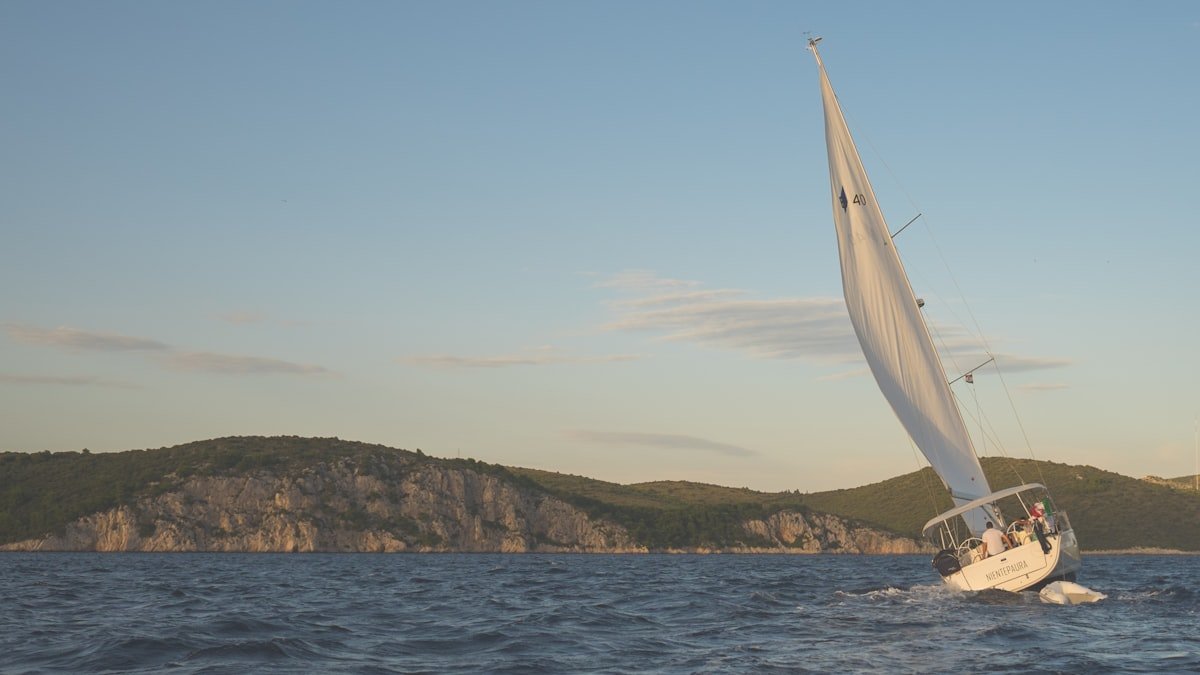
The Finot-Conq hull gives the Oceanis 31 a turn of speed unusual for a sub-32 ft cruiser. PHRF averages at 135 (range 129–153), which puts it in credible club-racing territory. One owner on Sailboat Owners Forums was direct: "We found the boat to be very comfortable and seaworthy" (Caboteur, Sailboat Owners Forums, December 2014). That same owner logged more than 10,000 NM on hull #16, including passages from Montreal to Georgetown in the Bahamas and Montreal to Chicago.
Beam is 3.39 m and waterline length is 8.69 m, giving a decent sail-area-to-displacement ratio for a boat of this weight class. Standard ballast on the deep keel is approximately 1,001 kg of cast iron. In Force 3–4 conditions (7–16 knots of true wind), expect comfortable, well-balanced sailing on all points. Above Force 5, reef early. The fractional rig responds well, but the 21 hp Yanmar won't muscle you out of trouble in steep seas if you've waited too long.
✓ Strengths
- •Finot-Conq hull with genuine sailing performance (PHRF avg 135)
- •Three keel options including lifting keel for shoal cruising
- •CE Category B offshore certification for 6 persons
- •Proven Yanmar 3YM20 engine with good parts availability
- •12-year production run means strong parts and knowledge base
✕ Trade-offs
- •Aft cabin athwartships berth uncomfortable at sea
- •In-mast furling systems prone to jamming
- •Single 70 Ah service battery is marginal as standard
- •Rudder bearing and keel-bolt seepage on older hulls
- •Water and fuel gauges unreliable
Weak points and what they cost
In-mast furling unreliability
Boats fitted with in-mast furling mains draw the most complaints. Multiple owners on the Sailboat Owners Forums report recurring jamming and poor sail shape. A slab-reefed main is a significant advantage when shopping. Retrofitting from in-mast furling to a conventional boom and sail typically runs €3,000–€6,000 depending on local labour rates and whether you keep the existing mast extrusion.
Rudder bearing wear and lower bearing leakage
European hulls have been documented with leaking rudder bearing seals and lower bearing wear. A pre-purchase survey should specifically check for play in the rudder stock and water in the steering compartment. Bearing refurbishment with new seals costs roughly €800–€1,500 hauled out. A full rudder re-bush pushes higher.
Keel-bolt and keel-to-hull joint seepage
Water ingress around the keel joint is a standard survey flag on older production GRP boats, and the Oceanis 31 is no exception. A keel-bolt pull, inspection, and reseal on a fin-keel boat typically costs €1,500–€3,000 at a yard, depending on bolt condition and whether any laminate repair is needed.
Lifting keel mechanism failures
The lifting keel variant uses a screw-jack mechanism that owners on YBW Forum report jamming from stones, general wear, and occasionally unscrewing itself. Annual cleaning, greasing, and anode replacement are essential. If the mechanism seizes and the keel needs reconnection, a hoist-out is required.
Hatch and portlight leaks
Leaks around hatches and portlights, especially forward over the V-berth, are a recurring theme across Beneteau models of this era. Unchecked rainwater ingress causes mould and can saturate the balsa-sandwich deck core. Budget €200–€500 per hatch for rebed and reseal, or more if core repair is already needed.
Other niggles
Interior hardware deterioration is common: cabinet hinges pulling out of their screws, drawers jamming, and moulded headliners sagging in humid climates. Water and fuel gauges are unreliable. One owner noted the water gauges were "totally useless, malfunctioned and required special monitoring" (owner review, Band of Boats). The standard single 70 Ah service battery is marginal. The Band of Boats sea trial recommends 2 × 70 Ah as the minimum. Check battery bank capacity on any used hull.
How it ages
The Oceanis 31's single-skin GRP hull ages predictably. No balsa core in the hull means no rot risk below the waterline, which simplifies long-term ownership. The deck is balsa-cored, however, so hatch leak prevention is not optional maintenance. Boats that have sat with unresolved portlight leaks can develop soft spots that are expensive to remedy.
Gelcoat osmosis is possible on pre-2012 hulls stored afloat in warm water without barrier coat. Inspect for blistering at survey, especially below the waterline. The Yanmar 3YM20 is one of the most widely serviced small marine diesels in the world. Parts are readily available, and a well-maintained unit should run comfortably beyond 5,000 hours.
Early hulls (2007–2010) are now 15+ years old and may need standing rigging replacement if it hasn't been done. Budget approximately €2,000–€4,000 for a full set of stainless wire standing rigging with swaged terminals on a 31 ft rig. If you find a boat with rod rigging (unusual on this model, but check), costs rise.
Beneteau Oceanis 31 price: what the market asks
As of August 2026, roughly 40–50 hulls are listed worldwide across major brokerage platforms. The EU market sits primarily between €55,000 and €80,000, with older 2008–2010 boats at the lower end and well-equipped 2015–2019 hulls at the top.
| Platform | Listings | Price range (approx. EUR) |
|---|---|---|
| YachtWorld (international) | 9 | From ~€62,000 (2010 hull) |
| Boat Trader (US-centric) | 28 | €70,000–€100,000 |
| boats.com | 9 | €45,000–€180,000 (filter bands) |
| iNautia (EU) | 7 | €49,000–€93,000 |
| Boatshop24 (EU/UK) | 4 | €53,000–€69,000 (2008–2013 hulls) |
| Band of Boats (FR) | Active listings | €76,000 (2019 hull example) |
For context, the US new-build price circa 2008 was $115,000 ready-to-sail on the East Coast. Today's used prices therefore represent roughly 40–85% of original list depending on year, condition, and equipment. EUR conversions use approximate rates as of August 2026 (GBP ~1.18, USD ~0.91).
Who this boat fits / doesn't
Good match
- Couples or small families wanting a genuine offshore-capable cruiser under 10 m LOA at a sub-€80,000 entry point.
- Club racers looking for a PHRF-competitive boat that doubles as a weekender.
- Shoal-water sailors who need the lifting keel variant's 0.95 m retracted draft, provided they commit to annual keel mechanism maintenance.
- First-time owners stepping up from dinghies or day-sailers who want Yanmar reliability, strong parts availability, and a well-documented boat with a large owner community.
Poor match
- Liveaboards needing serious tankage or interior volume. The 155 L water tank and single head rule out extended self-sufficient cruising without upgrades.
- Tall sailors over 1.85 m (6 ft 1 in) who will hit their head on companionway and cabin transitions regularly.
- Buyers allergic to project lists. Any Oceanis 31 over 10 years old will need attention to hatches, rigging, and likely the rudder bearings. This is not a turn-key purchase at the lower end of the price range.
Verdict
The Verdict
Choose Buy the Oceanis 31 if you want a proven Finot-Conq hull with real offshore credentials under 10 m, and you budget for survey-flagged items upfront
Best for: Couples and small families seeking a capable coastal/offshore cruiser at €55k–€80k
Choose Look elsewhere if you need liveaboard space, tall headroom, or want to avoid the in-mast furling gamble
Best for: Full-time cruisers or anyone over 6 ft 1 in
The Oceanis 31 earned its 12-year production run. The Finot-Conq hull delivers sailing performance that punches above this price bracket, the Yanmar 3YM20 is a known quantity, and the three keel options give genuine flexibility for different cruising grounds. Against it: the aft cabin layout is awkward, the electrical system ships underspecified, and older hulls will need rudder bearing and hatch attention. That makes it a strong buy for an informed buyer willing to commission a thorough survey and factor in €2,000–€5,000 of first-season maintenance on a pre-2015 hull. The sweet spot in today's market sits around €55,000–€80,000 for a 2010–2017 boat in honest condition.
Method: Assembled from Beneteau.com official model page, De Valk Yacht Brokers listing, Beneteau.com official model page (1.85 m); Beneteau Equipment List PDF V079853 July 2018 (1.80 m), SailboatData.com, SailboatData.com (2.17 m); Band of Boats lifting keel page (2.27 m), Beneteau.com official model page; confirmed by Beneteau Equipment List PDF V079853, Wikipedia – Beneteau 31, Cruising World review (1,001 kg); Beneteau Equipment List PDF V079853 July 2018 (994 kg), including owner reports. Data checked 2026-08-26. Listings data reflects asking prices at the time of checking. This dossier of facts is not a substitute for a marine survey.
Beneteau Oceanis 31 price: new, used by year, and what moves it
Beneteau Oceanis 31 Used Market Snapshot (2026)
| Years | Typical price (used) | What to check |
|---|---|---|
| 2016–2019 | €75,000–€95,000 | Latest-build examples (youngest confirmed year on market is 2019 per TopBoats/boats.com); Yanmar 21–22 hp saildrive; fractional sloop rig; three keel options (deep fin, shoal, lift-keel); check lift-keel screw-jack mechanism condition and anode, rudder bearing wear, and any deck-core moisture ingress around chainplates. |
| 2013–2015 | €62,000–€78,000 | Mid-run production; Yanmar 21 hp; standard mast 9/10 electro-polished aluminium on deck; check cored deck for delamination or moisture (especially around chainplates and deck hardware), interior joinery wear, and condition of 130 L rotation-moulded diesel tank (known gauge reliability issues reported by owners). |
| 2010–2012 | €49,000–€65,000 | Core production era following 2009 Yacht of the Year award; Yanmar 20–21 hp diesel; lift-keel variant: verify whether updated screw-jack mechanism has been retrofitted (original bronze nut prone to stripping after ~11 years, Beneteau issued a revised design at owner cost); keel trunk seals and side pads to inspect at survey. |
| 2008–2009 | €45,000–€60,000 | First production years; design by Finot-Conq, interior by Nauta; Yanmar 20 hp; early lift-keel boats used original screw-jack (100 turns, stiff, difficult to grease in-water—check for modified mechanism); inspect keel bolts, through-hulls, and spade rudder bearing for corrosion typical of 15+ year-old GRP boats. |
| 2003–2007 | €44,000–€57,000 | Pre-Oceanis 31 era boats often listed under related model names (Oceanis 311, 323, 331) sharing the same Finot/Beneteau production platform; Volvo Penta 19 hp or Yanmar diesel; check keel attachment bolts for weeping rust stains (sign of keel separation beginning), internal chainplate corrosion, and bilge pump/electrical wiring condition at this age. |
The Oceanis 31 depreciates moderately but steadily: the oldest listed examples (2008–2009) ask €45,000–€60,000 against original new prices of roughly €60,000–€75,000 ex-VAT, implying 15–25% residual loss over ~15 years in EUR terms, which is relatively contained for a production 31-footer. Condition and documented service history (especially keel, rudder, and engine) are the dominant price differentiators within any year cohort, meaning a well-maintained example consistently sells toward the top of its band while neglected boats can trade at 20–30% below peers of the same year.
The Oceanis 31 was used in small-fleet charter operations (GlobeSailor, Click&Boat, and Mediterranean independents) but was not a mass Moorings/Sunsail fleet boat at the scale of larger Oceanis models, so dedicated ex-charter inventory is limited; where charter history is disclosed, expect a 10–20% discount versus a comparable private-use boat of the same year, and budget for accelerated sail, winch, and interior wear requiring renewal.
How these prices compare across sizes and types → · Could this boat pay for itself in charter? → · What to check on a used Beneteau Oceanis 31 →
Looking for a Beneteau Oceanis 31?
We know this market and where the good ones are — new or used, wherever she happens to be. Tell us what you're after and we'll find you the best option.
Sources
- Sailboat Owners Forums (sailboatowners.com)· forum
- YBW Forum (ybw.com)· forum
- The Sailboat Guide (bolsadenavegantes.net)· yard
- YBW Forum· forum
- Life of Sailing· yard
- Murray Yacht Sales / Sailing Today review reprint; corroborated by Band of Boats model page and itboat.com· yard
- Sailboat Owners Forums· forum
- SailboatData.com; Band of Boats lifting keel page; Beneteau Equipment List PDF V079853· yard
- Beneteau.com official model page· yard
- Cruising World review· test
FAQ
How much does a used Beneteau Oceanis 31 cost?
As of August 2026, used Oceanis 31 prices range from approximately €49,000 for older 2008–2010 hulls to around €100,000 for late-production 2019 models in the US market. The bulk of EU listings sit between €55,000 and €80,000. Roughly 40–50 boats are listed worldwide across major brokerage platforms.
What are the common problems with the Beneteau Oceanis 31?
The most frequently reported issues are: in-mast furling jamming and poor sail shape, rudder bearing wear and lower seal leakage, water ingress around the keel-bolt joint, hatch and portlight leaks (especially over the V-berth), unreliable water and fuel gauges, and a marginal single 70 Ah service battery as standard. The lifting keel variant has additional screw-jack mechanism failure risks.
What engine does the Beneteau Oceanis 31 have?
The Oceanis 31 is powered by a Yanmar 3YM20 diesel producing 21 hp with shaft drive and a 125 A alternator. The fuel tank holds 130 L, which the Band of Boats sea trial found sufficient for approximately 40 hours at average speed.
Is the Beneteau Oceanis 31 good for offshore sailing?
Yes, it holds CE Category B offshore certification for up to 6 persons (wind below Force 8, waves under 8 m). One documented owner logged over 10,000 NM on hull #16, including passages from Montreal to the Bahamas. The Finot-Conq hull provides genuine sailing performance with a PHRF average of 135.
What keel options are available on the Oceanis 31?
Three keel variants were offered: a deep fin keel at approximately 1.85 m draft, a shoal fin keel at 1.30 m, and a lifting/centerboard keel that retracts to 0.95 m and extends to roughly 2.17 m. The lifting keel version features twin rudders designed to allow beaching.


